On Craft
Why a mandira is built like a temple
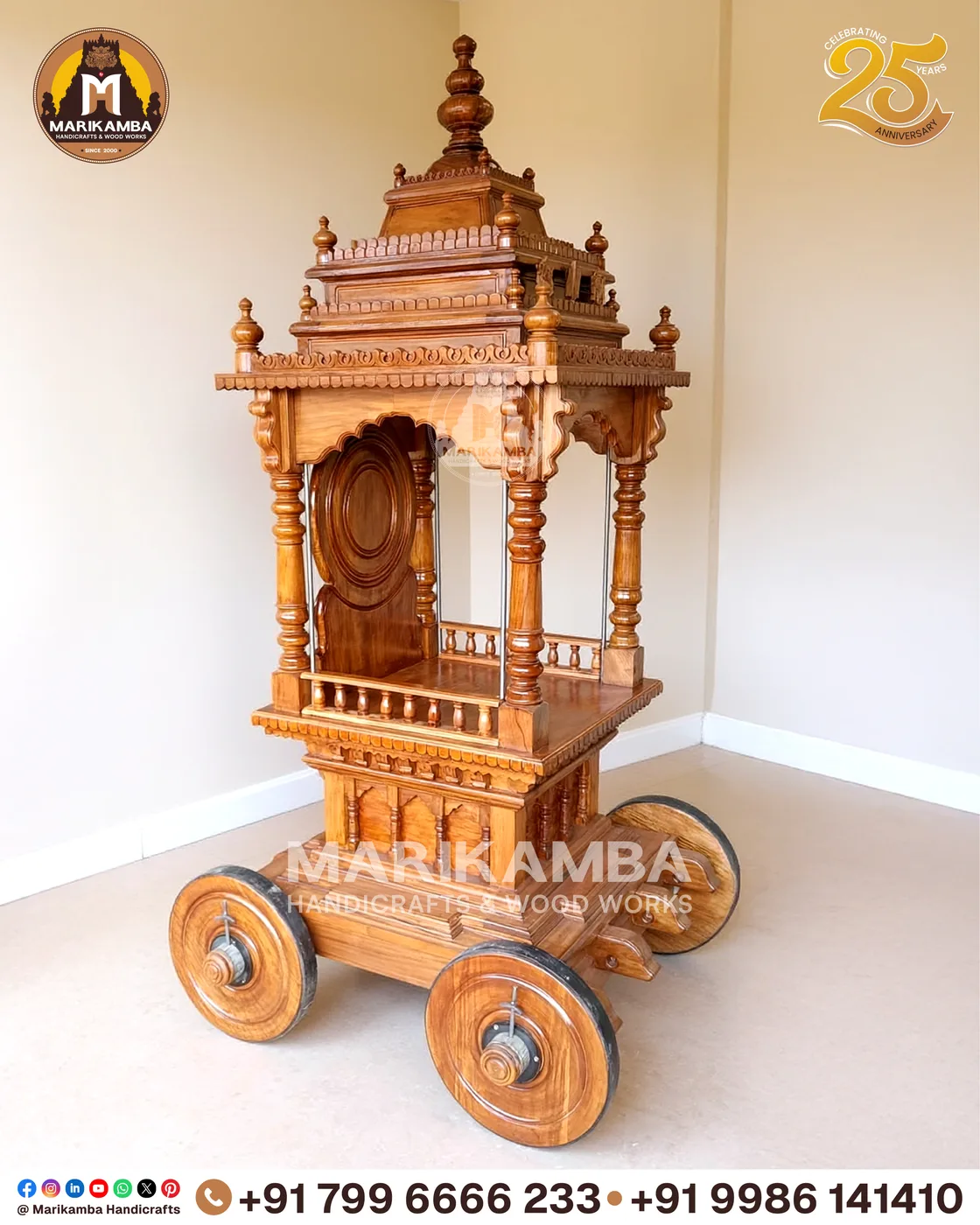
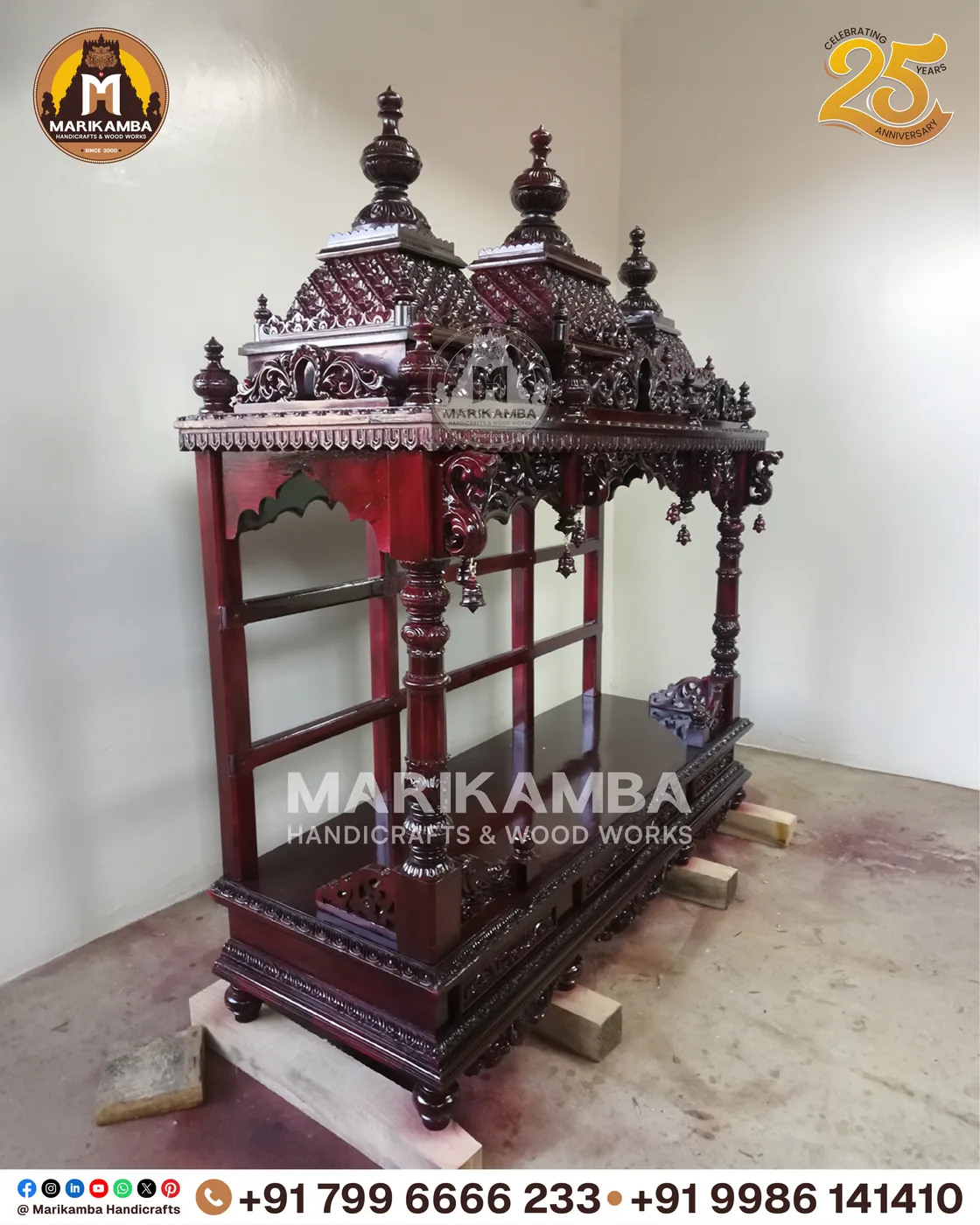
A pooja mandira is the smallest building a family will ever commission — and the one it will use every single day. That is why we refuse to treat it as furniture. A mandira has a base, pillars, an entablature and a crown, in the same order and for the same reasons a temple does.
Proportion carries the meaning. The height of the dome relative to the sanctum, the depth of the shelf relative to the deity, the width of the steps relative to the doorway — these relationships are what make a mandira feel inevitable rather than decorated. Ornament comes after, and only where the form asks for it.
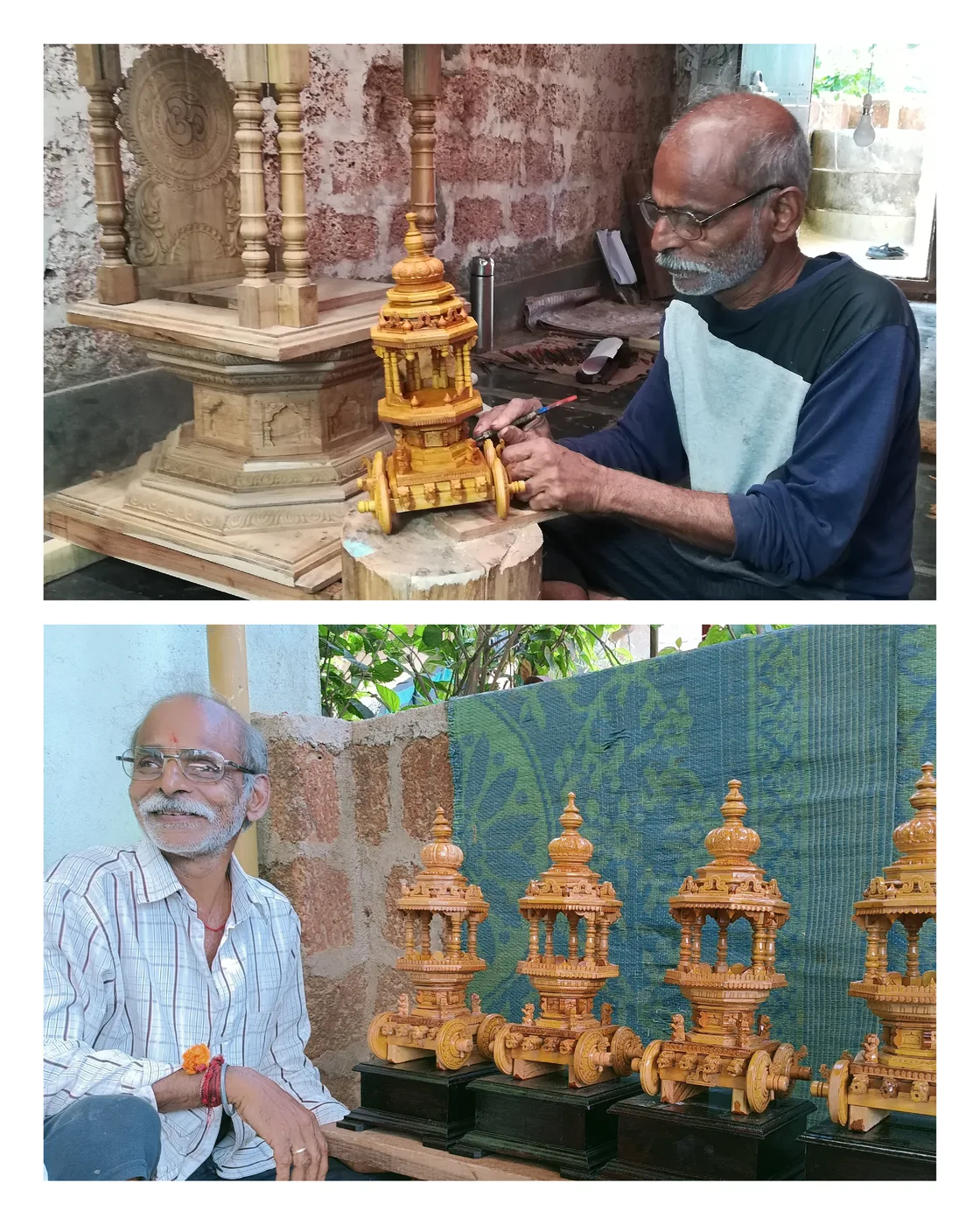
And because a home moves in ways a temple does not, we build with traditional joinery: a Marikamba mandira can be dismantled, carried to a new home, and reassembled without losing its fit. It is made to be inherited, not replaced.